
Article: Which Over-the-Counter Products Are Best for Rough Skin Patches on the Arms?
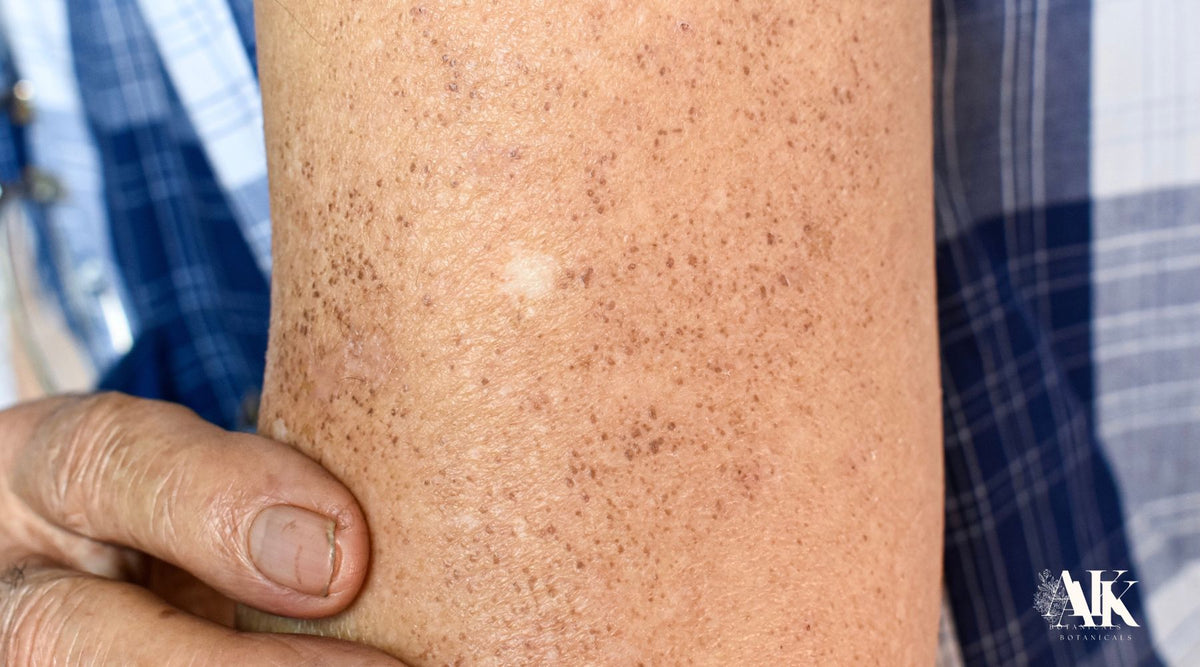
Which Over-the-Counter Products Are Best for Rough Skin Patches on the Arms?
Rough skin patches on the arms are common, especially when skin is dry, frequently exposed to the sun, or simply changing with age. But walk into the skincare aisle and the choices can quickly become confusing.
Should you use a moisturizer, urea cream, salicylic acid, an exfoliating lotion, or a more targeted skincare product?
The best over-the-counter product for rough skin patches on your arms depends largely on what the rough area looks and feels like.
Here’s what to look for.
Why Do Rough Skin Patches Appear on the Arms?
Not every rough patch has the same cause. Sometimes the problem is simply dry skin. Other times, you may notice clusters of tiny rough bumps, uneven texture, or an isolated area that feels noticeably different from the surrounding skin.
Common factors that can contribute to rough-looking skin on the arms include:
-
Dry or dehydrated skin
-
Buildup of dead skin cells
-
Keratosis pilaris
-
Frequent sun exposure
-
Friction
-
Changes in skin texture with age
For example, keratosis pilaris commonly appears on the upper arms and produces tiny bumps that can feel rough or dry.
That distinction matters because the product you would choose for widespread dry, bumpy skin may be very different from what you would use on one specific rough-looking spot.
1. Urea Creams for Very Dry, Rough Skin
If the skin on your arms feels generally dry, thick or rough, urea is one ingredient worth looking for.
Urea-containing moisturizers help soften dry skin, and the American Academy of Dermatology includes urea among ingredients commonly recommended for rough, bumpy skin associated with keratosis pilaris.
Urea products can be especially useful when roughness covers a larger area rather than appearing as one isolated patch.
Best suited for: widespread dryness, rough texture and small bumps.
2. Lactic Acid and AHA Lotions for Uneven Texture
Alpha hydroxy acids (AHAs), including lactic acid and glycolic acid, are another common option.
These ingredients help exfoliate dead cells from the surface of the skin. Lactic acid can also be found in moisturizing formulas, making it useful when skin feels both dry and rough.
Both the American Academy of Dermatology and Mayo Clinic identify lactic acid and other AHAs among ingredients used to improve the appearance of rough, bumpy skin such as keratosis pilaris.
Best suited for: rough, bumpy or uneven-feeling skin across the upper arms.
Start slowly, particularly if your skin is sensitive. Over-exfoliating can leave skin irritated rather than smoother.
3. Salicylic Acid for Rough, Bumpy Skin
Salicylic acid is another exfoliating ingredient commonly found in body lotions and creams.
It helps loosen accumulated dead skin cells and is included among the ingredients dermatologists may recommend for keratosis pilaris.
If you're using salicylic acid on your arms, follow the product directions carefully. More isn't necessarily better: exfoliating products can cause dryness or irritation when overused.
Best suited for: areas with persistent small bumps and rough surface texture.
4. Thick Moisturizers for Simple Dryness
Sometimes the simplest answer is the right one.
If the rough area improves noticeably after applying moisturizer, dryness may be playing a significant role.
Mayo Clinic recommends thicker moisturizers and ingredients such as petroleum jelly or glycerin to help trap moisture in dry skin. Applying moisturizer while the skin is still slightly damp after bathing can also help.
Best suited for: flaky, tight or seasonally dry skin.
You can also help protect the skin barrier by taking shorter showers, using warm rather than very hot water, and avoiding aggressive scrubbing.
5. Targeted Botanical Skincare for Individual Rough-Looking Spots
What if your concern isn't an entire area of dry or bumpy skin?
Maybe most of your arm feels normal, but you've noticed one particular rough or scaly-looking spot, especially on an area that has received years of sun exposure.
That's a different skincare need.
Rather than applying an exfoliating body lotion across the entire arm, some people prefer a targeted topical product designed to be applied only to the specific area of concern.
AKti-Clear® is a concentrated, botanically infused topical skincare solution designed for targeted application to rough, scaly-looking areas of sun-exposed skin.
Unlike a traditional body lotion, it isn't intended to be spread across the entire arm. The fine-tip ampoule allows a very small amount to be applied precisely to an individual spot.
AKti-Clear® contains botanical ingredients including Annona muricata (soursop) and Sanguinaria canadensis (bloodroot). Research has investigated constituents of these botanicals in laboratory settings, although those findings should not be interpreted as evidence that AKti-Clear® diagnoses, treats, cures or prevents any skin disease.
Best suited for: adults looking for a targeted cosmetic approach to the appearance of individual rough or scaly-looking spots on sun-exposed skin.
AKti-Clear® is a cosmetic skincare product and is not intended to diagnose, treat, cure or prevent disease.
Whole Arm or One Spot? That's the First Question to Ask
A useful way to choose between over-the-counter skincare options is to look at how much skin is affected.
If both upper arms feel generally dry and bumpy, a moisturizer containing urea, lactic acid, an AHA or salicylic acid may make sense.
If your skin is simply dry or flaky, start with a rich moisturizer and gentler bathing habits.
But if most of your skin feels normal and you're concerned about one distinct rough or scaly-looking area, especially somewhere that gets a lot of sun, don't automatically treat it like ordinary dry skin.
That difference is important.
When Should a Rough Patch Be Checked by a Dermatologist?
Not every rough patch should be managed with skincare alone.
If an area is new, changing, bleeding, painful, repeatedly crusting, unusually persistent, or simply looks different from the rest of your skin, it's a good idea to have it evaluated by a dermatologist before experimenting with cosmetic products.
This is particularly important for areas that have received substantial sun exposure over the years.
A dermatologist can determine what you're actually looking at and whether skincare is appropriate.
Frequently Asked Questions
What is the best over-the-counter cream for rough skin on the arms?
There isn't one product that's best for every type of rough skin. For widespread dry or bumpy texture, products containing urea, lactic acid, alpha hydroxy acids or salicylic acid are commonly used. For ordinary dryness, a thick moisturizer may be enough.
What ingredients should I look for in a lotion for rough arms?
Common ingredients include urea, lactic acid, glycolic acid, salicylic acid, and other alpha hydroxy acids. Moisturizing ingredients such as glycerin and petrolatum can also help when dryness is contributing to rough texture.
Why do I have rough patches on my arms?
Possible reasons range from ordinary dry skin and dead-skin buildup to keratosis pilaris and other skin changes. Because different conditions can look similar, persistent or unusual patches are worth discussing with a dermatologist.
Can sun exposure make the skin on my arms look rough?
Years of exposure can contribute to visible changes in sun-exposed skin. If you notice an isolated, persistent, or changing rough area on your forearms or other frequently exposed areas, consider having it evaluated instead of assuming it is simply dry skin.
Should I exfoliate rough patches on my arms?
Gentle exfoliation can improve some forms of rough, bumpy skin. The American Academy of Dermatology advises against aggressive scrubbing, however, because irritation can make rough, bumpy skin worse.
The best over-the-counter product for rough skin patches on the arms depends on what you're seeing.
Widespread dryness: try a rich moisturizer.
Small bumps across the upper arms: look for urea, lactic acid, AHAs or salicylic acid.
Rough overall texture: gentle chemical exfoliation combined with moisturization may help.
One isolated rough or scaly-looking spot: don't assume it's the same thing as ordinary dry skin. Consider a dermatologist evaluation, particularly if the area is persistent, changing or frequently sun-exposed.
For adults looking specifically for a targeted cosmetic approach to the appearance of individual rough, scaly-looking spots on sun-exposed skin, learn more about AKti-Clear® and how its precision application differs from an all-over body lotion.
This article is for educational purposes and is not medical advice. AKti-Clear® is a cosmetic skincare product and is not intended to diagnose, treat, cure or prevent any disease.


